
Why Women Are Paying More Attention to Vaginal Suppositories
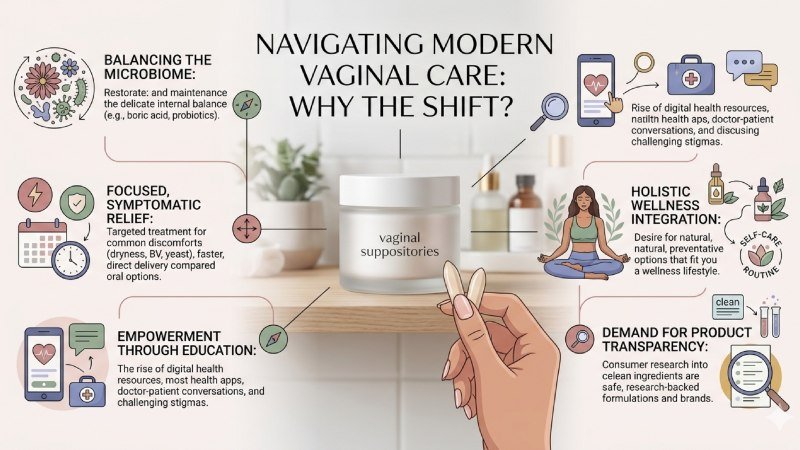
A few years ago, most women had never heard of vaginal suppositories outside of a prescription from their gynecologist. Now, they’re showing up in wellness routines, bathroom cabinets, and TikTok comment sections, as if they’ve always been there. The shift has been fast, visible, and driven almost entirely by women talking openly about what actually works for their bodies.
If you’ve noticed boric acid suppositories trending in your feed or heard a friend casually mention them like they’re as routine as a daily vitamin, you’re not imagining a cultural shift. Women are taking vaginal health into their own hands in a way that previous generations simply didn’t have the language, access, or social permission to do.
Here’s what’s behind the change.
The Conversation Around Vaginal Health Has Finally Opened Up
For a long time, vaginal health existed in a conversational dead zone. Women dealt with infections, discomfort, and recurring symptoms privately, often cycling through the same prescriptions without ever questioning whether there was a better approach. The topic was considered too personal or too awkward for public discussion.
Social media changed that. Creators, nurses, OB-GYNs, and everyday women started talking about vaginal pH, the microbiome, discharge, and infection cycles with a level of openness that normalized the conversation.
Once the stigma started to crack, women listened and started asking better questions, researching ingredients, and seeking out products that gave them more control over their own care. Suppositories, which had quietly existed in clinical settings for decades, suddenly found an audience ready for them.
Women Are Tired of the Prescription Cycle
One of the biggest drivers behind the suppository trend is frustration with the standard treatment loop. Yeast infection? Here’s fluconazole. BV? Here’s metronidazole. Symptoms come back three weeks later? Here’s the same prescription again.
For women with recurrent infections that don’t respond to conventional treatment, that cycle gets exhausting fast. Boric acid suppositories entered the mainstream largely because they offered a different mechanism of action that addressed pH and microbial balance rather than just killing off whatever was overgrown in the moment.
More often than not, women want tools that work alongside their prescriptions. They want options that fill gaps between appointments and give them something to reach for when symptoms flare without waiting three days for a clinic visit.
Suppositories Deliver Ingredients Where They’re Needed Most
One of the practical reasons suppositories are gaining traction is the delivery method itself. Oral supplements have to survive digestion, get absorbed into the bloodstream, and eventually make their way to the vaginal environment. That’s a long, indirect path with a lot of potential for reduced potency along the way.
Suppositories bypass all of that. They deliver active ingredients directly to the vaginal canal, where they dissolve and begin working on the tissue and microbiome immediately.
Whether the active ingredient is boric acid for pH restoration, Lactobacillus strains for microbial support, or vitamin C for acidity, the localized delivery means higher concentrations reach the target area faster than anything taken by mouth.
This directness is one of the reasons clinicians have used suppositories in gynecological care for decades. What’s new is that women are now accessing them proactively rather than only receiving them as a last-resort prescription.
The Boric Acid Moment
Boric acid deserves its own section because it’s the ingredient that arguably started the entire mainstream suppository conversation. It’s a mild antiseptic compound that lowers vaginal pH, disrupts bacterial and fungal biofilms, and creates conditions that favor the regrowth of protective Lactobacillus bacteria.
The CDC includes boric acid in its treatment guidelines for recurrent vulvovaginal candidiasis, particularly for infections caused by non-albicans Candida strains that don’t respond to standard antifungals. It’s been used in clinical practice for over a century, but many women had no idea it existed until social media brought it into the spotlight.
What makes boric acid suppositories so appealing is that they’re available over the counter, are relatively affordable, and are effective for a range of symptoms that otherwise require a prescription.
Safety Still Matters
The growing accessibility of vaginal suppositories is a net positive, but it comes with a responsibility to use them correctly. Boric acid is toxic if taken orally and should never be used during pregnancy. Not every symptom that feels like a yeast infection actually is one, and self-treating the wrong condition can delay proper care.
The smartest approach is to get a proper diagnosis first, especially if symptoms are new or severe, and then use suppositories as part of an informed strategy rather than a guess. A healthcare provider can help determine whether boric acid, probiotics, or a different intervention is the right fit for your situation.
Women Are Leading This Shift
The rise of vaginal suppositories is a reflection of women demanding better tools, better information, and more agency over their own bodies. The conversation that started on social media has moved into medicine cabinets, clinical conversations, and product development, making vaginal health less of a mystery and more of a manageable, proactive part of everyday wellness.