How to Choose Doors and Hardware for a Busy Family Home
Door hardware is one of the few home upgrades you use every day. A lever a child can open with full hands, a bathroom lock you can release from the hallway, or a back door that locks automatically can make daily routines easier.
Decide function first and style second. Once you know what each door needs to do, measure it, compare tested hardware, then pick a finish. Those details will help you compare options at an online storefront or a local hardware store.
Key Takeaways
- Match function to the room. Use keyed entry hardware for exterior doors, privacy sets where needed, and passage or fixed handles where no lock is necessary.
- Look for tested performance. BHMA Certified Secure Home ratings and ANSI/BHMA grades use different scales, so check what each rating covers.
- Measure before you buy. Door thickness, hole size, backset, and handle orientation determine whether hardware fits.
- Check the frame. A reinforced strike and suitable long screws can improve resistance to forced entry.
- Confirm local requirements. Exit-door and garage-to-house door rules can affect your choice of locks and closers.
Start With Function, Room by Room
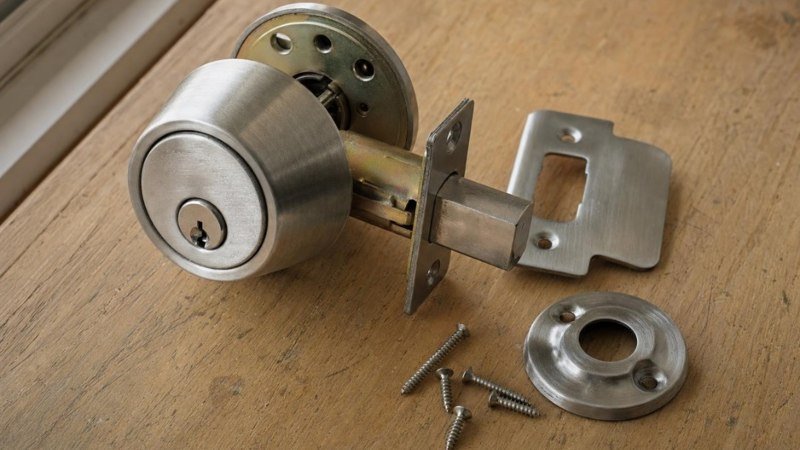
- Keyed entry: for front, back, and garage-to-house doors. A separate deadbolt adds protection beyond a typical locking knob or lever.
- Privacy: for bedrooms and bathrooms. These lock from inside and usually have an emergency release, such as a pinhole or slot, on the hallway side. Check how the release works before installation.
- Passage: for hallways, linen closets, and children’s rooms where you prefer no lock. The handle operates a latch but doesn’t lock.
- Dummy: for doors that need only a fixed pull, such as a pantry door held shut by a ball catch. Some paired doors also use a dummy handle on the inactive side.
Understand Hardware Ratings
The BHMA Certified Secure Home label is designed for homeowners. It rates a product in three categories: Security, Durability, and Finish. Each receives a letter, with A the highest rating, followed by B and C.
ANSI/BHMA performance grades range from 1 to 3. Within the relevant product category, Grade 1 has the highest requirements and Grade 3 is the basic level. Compare grades for the same type of hardware rather than treating them as a rating for the entire door.
For exterior doors, an ANSI/BHMA Grade 2 or better deadbolt is a useful starting point. If a product carries the Secure Home label, compare all three letter ratings. Higher-rated hardware can help, but the door, frame, and installation also affect security.
Measure Before You Order
Many U.S. homes use standard door dimensions, but confirm yours. Record these five details before choosing replacement hardware.
- Door thickness. Interior doors are often 1-3/8 inches thick and exterior doors 1-3/4 inches. Measure across the door edge.
- Bore hole. The large hole through the face of the door is commonly 2-1/8 inches across. Older or specialty hardware may use a different size.
- Measure from the door edge to the center of the bore hole. Common U.S. residential backsets are 2-3/8 inches and 2-3/4 inches. Many replacement latches adjust to either.
- Latch faceplate. Note its dimensions and whether it has square or rounded corners. Some doors use a drive-in latch with no faceplate.
- Record which side the hinges are on and whether the door swings inward or outward. Follow the manufacturer’s handing diagram, since naming conventions vary. Many levers are reversible, but not all.
Take photos of the door edge, latch faceplate, and strike plate on the jamb. Include a tape measure where useful so you can check dimensions while comparing listings.
Handles a Whole Family Can Use
Levers are often easier to operate than knobs. They can help children with full hands, grandparents with stiff fingers, and parents carrying laundry.
This follows the approach in section 309.4 of the ADA Standards: operable parts shouldn’t require tight grasping, pinching, or twisting of the wrist. Those standards generally don’t apply to private single-family homes, but the principle is useful when choosing comfortable hardware.
Smart Locks for Real Life
A smart lock is useful when its features solve a household problem. Prioritize the functions you’ll actually use:
- Time-limited guest codes for sitters, dog walkers, and contractors, reducing the need to share spare keys.
- Adjustable auto-lock to reduce forgotten locking. Check whether the lock can detect an open door, rather than relying only on a timer or a phone’s location.
- A backup way in, such as a physical key or external emergency-power contacts. Confirm what the model requires if its batteries run out.
- Compatibility with your household’s devices. Check whether the features you want require a separate hub, an internet connection, or a subscription.
Smart features don’t change the physical strength of the bolt. Check the lock’s tested performance and fit before comparing its electronics.
Where to Shop Online, Responsibly
Online storefronts make it easier to compare functions, grades, and finishes when you have your measurements ready. A storefront such as Doors for Pros lists configurable options for products such as Grade 1 cylindrical locks and surface-mounted door closers. Check the required door preparation, mounting details, included parts, and return policy before ordering. A high performance grade doesn’t guarantee that a lock fits your door.
Quiet, Safe Closings
Slamming doors disturb sleep and can pinch fingers. A suitable pneumatic closer on a storm or screen door lets you adjust closing speed so the door shuts without banging. Follow its instructions and check that the door still latches reliably.
The door between an attached garage and the house needs special attention. Many jurisdictions using recent residential codes require specific door construction, along with self-closing and self-latching hardware. Suitable spring hinges or a surface-mounted closer may meet the closing requirement, but confirm local rules and compatibility with the door assembly before buying.
Security Improvements to Consider
Forced entry puts stress on the frame as well as the lock. For a suitable wood-framed entry, two hardware changes can strengthen those connections:
- Use a reinforced strike with screws long enough to reach the wall framing, often 3 inches. Follow the hardware and door manufacturer’s installation guidance.
- Where the assembly allows it, replace a short screw in each hinge with a longer screw that reaches the framing. Avoid overtightening and pulling the frame out of alignment.
Check screw clearance before drilling. These changes won’t repair a split jamb, damaged door, or poorly secured frame.
Safe exit matters too. Under the International Residential Code, the required exit door must open from inside without a key or special knowledge. Double-cylinder deadbolts require a key on both sides and may not be permitted on that door. Check local requirements before installing one.
Choose Door Materials and Finishes
Door material affects maintenance and durability as well as security. Wood offers a traditional appearance but may need periodic refinishing and can swell in humid weather. Fiberglass needs relatively little maintenance and resists dents. Steel can be affordable and durable, but it can dent and may rust where its protective coating is damaged.
For hardware, satin finishes often make fingerprints less noticeable than polished finishes. Matte black can show oils and smudges, depending on the coating. In coastal or exposed locations, check the manufacturer’s corrosion guidance alongside any Secure Home Finish rating. Keep nearby finishes consistent if you prefer a coordinated look.
Room-by-Room Checklist
- Front door: a tested Grade 2 or better deadbolt, a suitable reinforced strike, and any smart features you’ll use.
- Family entry: easy-to-use locking hardware; compatible self-closing hardware where required for a garage-to-house door.
- Bathrooms: a privacy set with an outside emergency release.
- Children’s rooms: passage hardware, or a privacy set with a release adults know how to use.
- Closets and pantry: passage hardware where a latch is needed, or a dummy pull where a separate catch holds the door shut.
- Patio and French doors: hardware matched to the door system, with the inactive leaf of paired doors secured as the manufacturer specifies.
Function, Then Measurement, Then Style
Choose what each door needs to do, confirm the dimensions, compare tested hardware, and then select a finish. Check local requirements for garage entries and exit doors before ordering. Careful fit and installation matter just as much as the hardware you choose.